Material Matters of Sustainability
Five Material Matters of Sustainability
In order to realize our corporate mission of creating a prosperous society in which each individual flourishes, we have established the following five material matters for our sustainability activities.
Inspire new ways of working
What does work mean to us? How can we work better? Since our foundation as a recruitment advertisement company, we have been constantly asking these questions.We will continue to evolve new ways of working to find paths for individuals to achieve their aspirations.
Close the opportunity gap
We believe that the more people are free to pursue their passions, the better the future becomes. Closing the opportunity gap is a key factor for this. We have, and will continue to match countless people and businesses in ways that have not been done before.
Celebrate diversity and inclusion
We celebrate diversity in nationality, race, religion, gender, age, disabilities, sexual orientation and gender identity, and more. We respect and capitalize on each other's differences to promote creativity in the world.
Respect human rights
Our basic principle, "creating a brighter world where all individuals can live life to the fullest," starts from respecting human rights. We follow Recruit Group's Human Rights Policy and Code of Ethics to respect the rights of our diverse stakeholders.
Conserve the environment
We all have a common responsibility for the global environment. We strive to reduce our negative impact on the environment by addressing climate change, resource preservation and biodiversity conservation.We aim to enlighten society with our environmentally conscious lifestyle.
Materiality Analysis Process for Sustainability
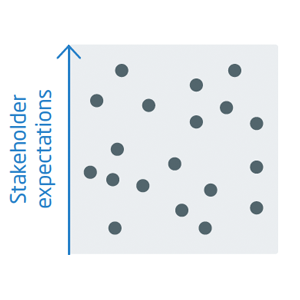
To streamline Recruit Group's materiality analysis, we first conducted stakeholder dialogues with around 70 international NGOs and sustainability-driven organizations to understand their expectations. We then mapped the results to the Sustainable Development Goals (SDGs)'s 169 targets and 17 agendas, which are global sustainability themes unanimously adopted at the United Nations Summit. After that, we categorized them into 18 issues including human rights, and plotted them on the vertical axis.
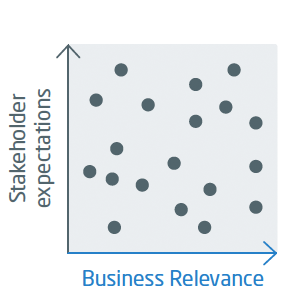
Next, we examined the relevance of these categories to the various global businesses of Recruit Group in terms of economic, environmental, and social impact, and plotted them on the horizontal axis.
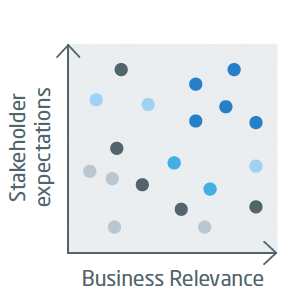
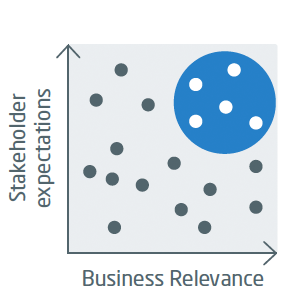
With social issues with high expectations from stakeholders on the vertical axis, and social issues with high relevance to our business on the horizontal axis, we identified five material matters of sustainability which Recruit Group should focus on.
1. Engage with Stakeholders to Define Issues
Recruit Group gathered the expectations, demands, and opinions of roughly 70 stakeholders. We then organized that data into 18 categories of social issues based on the United Nations' 17 Sustainable Development Goals (SDGs), which are milestones for achieving global sustainability and improved human rights.

2. Evaluate Stakeholder Expectations
To identify topics of priority, Recruit Group arranged the 18 categories along a vertical axis based on stakeholder interest.
3. Assess Business Relevance
Recruit Group rated the 18 social issues based on their relevance to Recruit Group's various businesses to determine their position along a horizontal axis.
4. Identify the Material Issues
Recruit Group then identified the issues that aligned most closely with stakeholder expectations and Recruit Group's businesses.
5. Review the Material Issues and the Process
Recruit Group verified the highest ranking issues in the Sustainability Committee with external sustainability experts and evaluated the materiality analysis process.

6. Determine the Material Matters
Following the Sustainability Committee's review, Recruit Holdings' Board of Directors resolved to concentrate on five material matters. The Board agreed that no material matter would be prioritized over another, and that each material matter would be pursued in conjunction with the others.
Recruit Group's materiality analysis is an ongoing process that considers changes in stakeholder expectations and business relevance.
As of March 31, 2021.